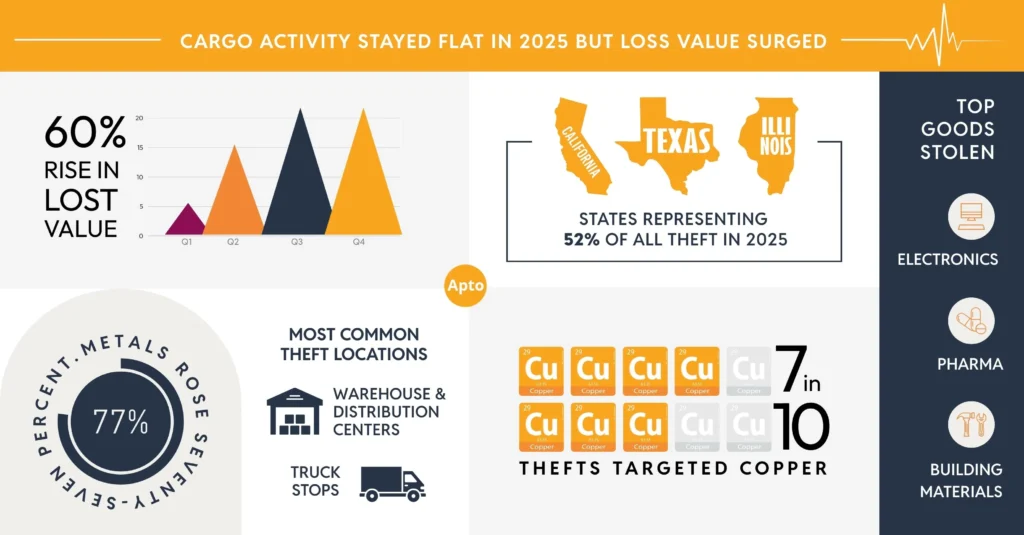
Law enforcement and industry sources have shared recent data that shows logistics exploitation, cargo theft, and freight fraud increased heavily in 2025. Driven by high commodity prices and the ease of informal resale channels, copper theft has emerged as one of the most widespread forms of cargo crime in the US.
What began as a problem for construction sites is now a growing concern across all transportation – and ITAD is not immune.
Why This Matters in ITAD
The combination of high-value metals and sensitive data found in IT hardware makes ITAD shipments increasingly attractive to criminal networks. When metals like copper are stolen, the loss is more than financial, it can expose data security, undermine compliance reporting, and break chain of custody.
As infrastructure refresh cycles accelerate and volumes increase, the consequences of a single weak link in transportation security become more severe.
In a world where raw materials have significant market value, transportation fraud and cargo theft are now operational vulnerabilities that must be addressed with the same attention and discipline as data sanitization.
How You Can Reduce Exposure
With a combination of technology, verification standards, and process discipline, companies can combat this threat.
- Audit Transportation Workflows | Most fraud events can be traced back to informal processes like carriers without verification, undocumented route changes, or unclear responsibility during transit. An audit will allow you to identify these blind spots and ask your ITAD partner if the right protocol is in place to prevent theft.
- Strengthen Chain-of-Custody | Three questions that determine a strong chain-of-custody: (1) Do you have direct contact with the field team and logistics provider, if different? (2) Does the field rep verify the truck and does the driver match the paperwork? (3) Do you have access to tracking devices that allow you to know where the shipment is at all times?
- Enhance Tracking & Monitoring | Opportunities for theft shrink dramatically when real-time tracking is available. Outside of when a shipment departs and arrives, a partner should be able to keep a pulse on every move the IT assets make with hidden trackers, apps, or other devices.
- Vet Your Logistics Partner | Fraud and theft can be escalated if companies do not have an ITAD partner with the right procedures in place. A reliable partner should be clear and upfront about their security controls, escalation protocols, and reporting standards – not just in ideal scenarios.
Raw materials continue to increase in value and supply chains are becoming more complex. For organizations managing IT assets, reducing exposure to transportation fraud means treating logistics with the same discipline as data security. Ensuring clear processes, continuous visibility, and verified partners turn the vulnerability of moving IT assets into a controlled environment.