
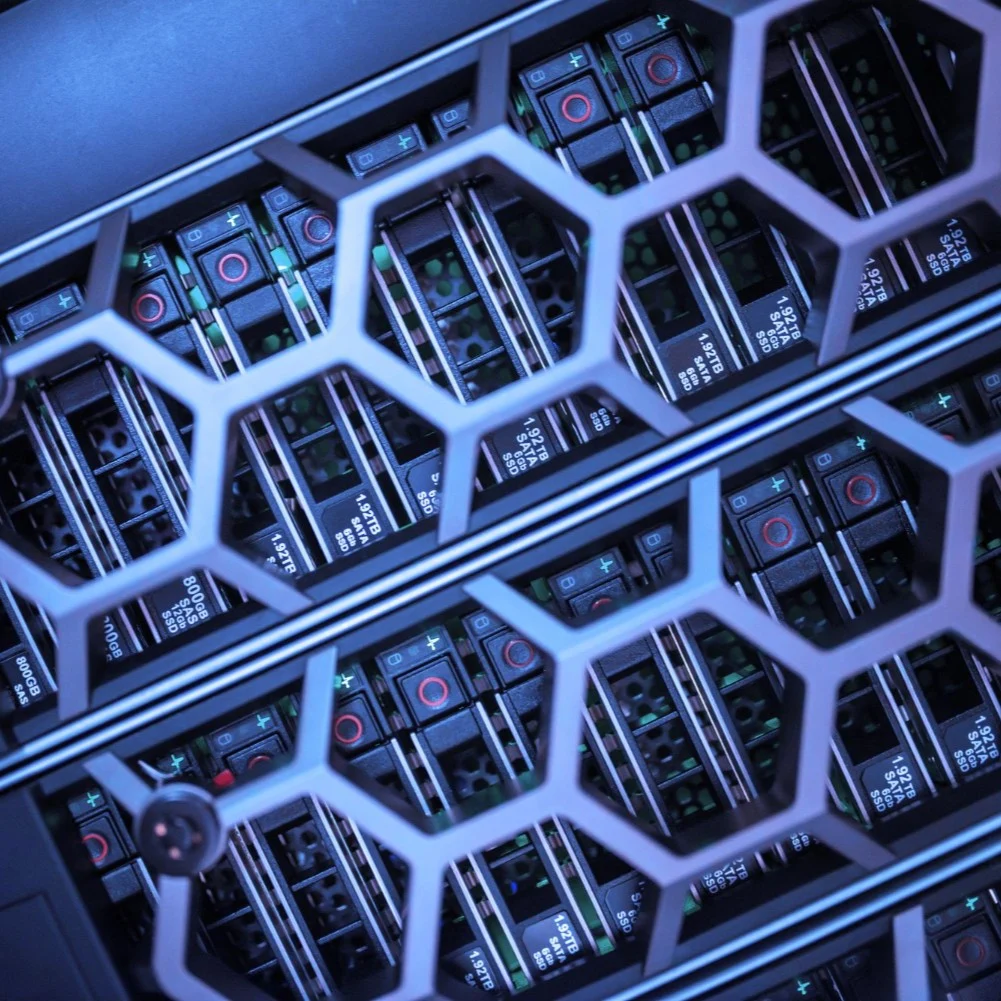
Data center decommissioning doesn’t look the way it did even a few years ago. Racks are denser, cooling is more complex, data sprawls across more environments, and – increasingly – the equipment coming offline isn’t just traditional compute and storage. It’s GPU clusters, specialized AI accelerators, liquid-cooled infrastructure, and edge nodes that barely existed in most environments a few years back.
At Apto, our name means “to adapt,” and that’s exactly what a modern decommissioning project demands. Whether you’re operating or retiring a traditional server room or unwinding an AI training cluster, the fundamentals of a successful project haven’t changed, but the details underneath them have. A little planning goes a long way toward avoiding the problems that can derail a project once it’s underway.
Here is your checklist to make sure it goes off without a hitch:
Get the Scope Right
Define scope up front, whether it’s 10 servers at one site or 10,000 globally. GPU and liquid-cooled infrastructure require different handling, data destruction, and logistics than traditional compute. Make sure your partner can handle both in tandem, not as two separate projects.
Put the Right Person in Charge
The project lead should be organized, technically knowledgeable – including with AI hardware – and responsible for communication between the technical team and stakeholders.
Line Up the Right Skills, Early
Data destruction experts and technicians experienced with GPU racks and liquid cooling are now equally essential. Bring in any skills you lack before the project starts.
Time it Right
Account for seasonal peaks and make sure key people are available when needed. AI refresh cycles run faster than traditional ones, so plan for this to recur.
Know Where Your Data Lives
Sensitive data isn’t confined to drives – it can live in GPU memory, model weights, training data, and firmware. Map every location that could hold it, traditional or AI-specific, before the project starts.
Know Your Obligations
Know your requirements under HIPAA, PCI, GDPR, or applicable state laws, and the cost of missing them. AI systems add data sovereignty and governance considerations that can extend risk beyond your organization. Treat existing laws as a floor, not a ceiling.
Decide What Happens to the Equipment
Have a plan before the project starts:
- Reuse – Repurpose equipment for lower-demand workloads. Retired GPUs often still have value here.
- Resell – Recoup costs on equipment with useful life left. The AI hardware resale market moves faster than the traditional one.
- Recycle – Responsibly recycle what’s left, protecting the environment and your reputation.
Expect the Unexpected
Even with every one of these questions answered well, real projects run into the unexpected. The goal isn’t to eliminate that possibility – it’s to make sure that when it happens, it’s a minor course correction instead of a crisis. That starts before the project begins, with margin built in internally and with every partner involved. If you’re shipping equipment, leave room for a few more pieces than expected. If you’re servicing equipment, leave time for a few more changes than planned. This matters even more with AI infrastructure, where a single misjudged rack can mean thousands of pounds of additional weight, different power requirements, or cooling infrastructure you didn’t plan to touch. Never work at the edge of your ability to deliver – margin is what keeps Murphy’s Law from turning into a missed deadline.
If a surprise does outpace that margin, communication and responsiveness take over. Immediately flag the issue to your primary stakeholders and move quickly to offer real alternatives. Responding fast with a plan builds confidence in the project and sets the right expectations for how the newly expanded scope will get done. It also helps to have a process for everything, built in advance. At Apto, we have an approved process for every project type we take on, traditional or AI. On the rare occasion we hit something we haven’t seen before (AI infrastructure has produced a few of those in recent years) we solve it as a team, then turn that solution into a repeatable process so we’re ready if it comes up again.
What This Looks Like in Practice
We arrived at a project scoped for 5 pallets of equipment. On-site, we found 15 additional pallets. We used our margin and worked with our carrier to move all 20 in two runs. After the second truck left, our team found another 15 pallets waiting, so we called the trucks back. By the time they arrived, there were 12 additional pallets that needed to go. The scope grew from 5 pallets to 47, and by using our margin and adjusting quickly with our partners, we accommodated all of it without missing a beat.
At another site, we arrived expecting wiped equipment and found none of it had been touched. We couldn’t accommodate the wipe on the spot, so we paused the project for a day while we overnighted remote wiping equipment to our on-site staff. The next day, our IT team initiated and oversaw the wipes remotely, protecting the customer’s data and getting the project back on schedule. Today, that same scenario increasingly shows up with AI hardware too. GPU memory and specialized storage require different tools and different expertise than a standard drive wipe, so our same approach applies: pause, adapt, resolve.
Plan Well, Adapt Fast
Decommissioning projects – traditional, AI, or a mix of both – go smoothest when they’re planned around the right questions from the start and handled by a partner ready to adjust the moment something doesn’t go to plan. That combination is what separates a successful outcome from an organizational headache.
Planning your next decommissioning project? Let us help and handle your traditional and AI infrastructure in tandem, under one plan instead of two. To keep things smooth, and keep surprises off your invoice, we’ll talk through contingency pricing ahead of time, so we can offer a solution quickly without leaving anyone in the dark.